
Bedesten Cultural Center in Lefkoşa — What to See and How to Visit
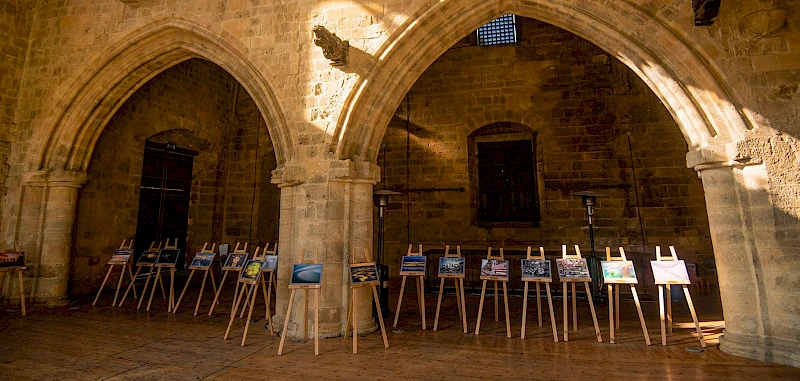
The Bedesten is located in the Old Town of Lefkoşa, next to the Selimiye Mosque and the Bandabulya Market. It is one of the oldest historical buildings in Northern Cyprus: its early parts are linked to the Byzantine period, the building was later reconstructed in the 12th–16th centuries, and in 1573 it was adapted into a covered market. After a restoration between 2004–2009, the Bedesten functions as a cultural space. On regular days, access inside may be limited, and visiting during events depends on the format of the event and tickets.
- Bedesten in Northern Cyprus
- History of the Bedesten in Nicosia
- Architecture of the Complex
- Bedesten Today
- How to Get There
- Frequently Asked Questions
Bedesten in Northern Cyprus
The Bedesten, or Bedestan, is one of the most important historical buildings in Lefkoşa. It is located in the Selimiye quarter between the Selimiye Mosque and the Bandabulya Market.
The main feature of this place is its multilayered history. At various stages, the building was used as a church, an episcopal cathedral, a covered market, a warehouse, and a cultural venue. Therefore, the Bedesten is interesting not only as an architectural object but also as a rare example of how a single structure reflects several eras of Northern Cyprus at once.
Currently, it is a cultural center most often visited as part of a walk through the Old Town. It is usually combined with a tour of neighboring attractions because everything is within a short walking distance.
History of the Bedesten in Lefkoşa
Byzantine Period
The early stage of the Bedesten's history is confirmed archaeologically: fragments of a Byzantine basilica are preserved inside the current building. These parts date back to approximately the 6th century. This is why the Bedesten is considered one of the oldest surviving religious structures in the center of Lefkoşa.
Lusignan Period
Later, the building was expanded and reconstructed. In the 12th–14th centuries, Gothic elements appeared in its architecture, and the structure itself is associated with the Church of St. Nicholas. At the same time, the early Byzantine foundation did not disappear but remained part of the overall construction.
Venetian Period
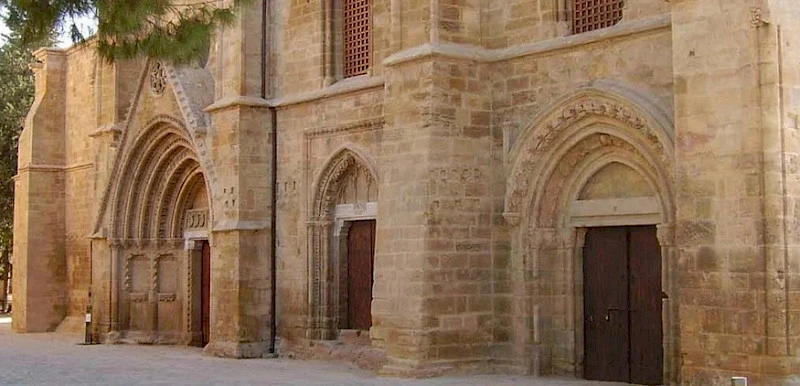
During the Venetian era, the Bedesten was used as an Orthodox episcopal cathedral. It was then that the most expressive northern facade was created, which is still considered one of the main architectural details of the complex. It preserves coats of arms, decorative stone carvings, and elements combining Gothic and Renaissance styles.
Ottoman Period
In 1573, a few years after the Ottoman conquest of the island, the building was adapted into a bedesten — a covered textile market. Later, other goods were traded here as well, and by the 18th century, the place had become an important center for urban trade. In the 19th–20th centuries, the building was used as both a flour warehouse and a utility room.
British Period and Later Use
After the change in the island's administration, the possibility of returning the building to its church function was discussed, but this plan was not implemented. When the new Bandabulya Market opened in 1932, the Bedesten finally ceased to play the role of a city market and was used mainly as a warehouse.
Architecture of the Complex
The Bedesten in Lefkoşa differs significantly from typical covered markets of the Ottoman Empire. Its appearance combines Byzantine, Gothic, Venetian, and Renaissance elements. This is precisely what makes the building architecturally unusual even against the backdrop of other monuments in the Old Town.
The plan is based on a cross-shaped Byzantine scheme, yet the building features a high nave, characteristic of Gothic architecture. The southern double nave is considered a remnant of an earlier church building, while the middle part is one of the oldest sections of the complex.
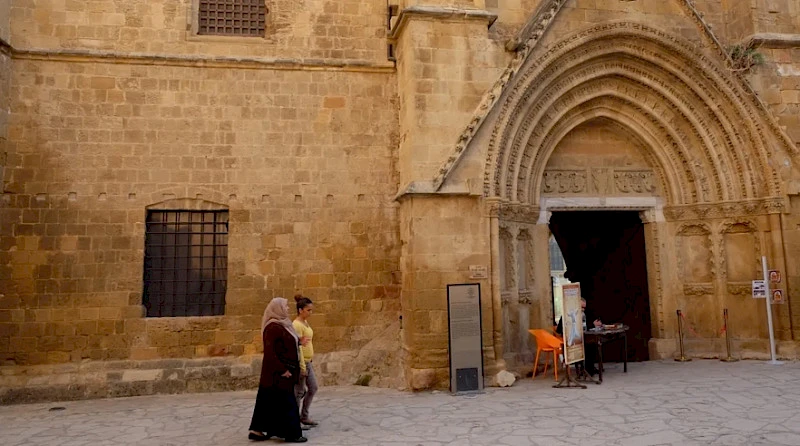
The northern facade is the most expressive. It faces Selimiye Square and the entrance from the mosque side. Here you can see a richly decorated portal, coats of arms on both sides of the entrance, decorative carvings, and figures of animals and gargoyles. This part is especially interesting for those who view the Bedesten as an architectural monument rather than just a historical location.
Bedesten Today
From June 2004 to 2009, the building underwent a large-scale restoration supported by international and local organizations. In November 2009, the Bedesten opened as a cultural venue. The restoration project received the Europa Nostra award, and the complex began to be used for exhibitions, concerts, and other public events.
Today, the Bedesten primarily functions as an event space rather than a museum with permanent free entry. Therefore, in practice, it is better to count on an exterior inspection and check the program if you want to get inside during an exhibition, concert, or special event.
Musical performances, cultural programs, and city festivals occasionally take place here. Due to its location in the heart of the Old Town, the site is convenient to include in a walking route along with neighboring attractions.
How to Get There
The Bedesten is located in the center of Lefkoşa. It is convenient to take a bus to the stop at the Kyrenia Gate, from where it is a walk of just under 1 km to the building. Taxis are also usually available from there.
For those traveling by car, you can aim for the parking lot near the Old Town.
If you don't have a car, you can check rental options via Discover Cars or directly at one of the rental companies in Northern Cyprus. Details about options and rental procedures are collected in the article "Car Rental in Northern Cyprus".
Near the Bedesten, it is convenient to visit the Selimiye Mosque, the Bandabulya Market, the ancient hammam, and the Büyük Han.
Frequently Asked Questions
How much does entry to the Bedesten cost?
On regular days, there may not be a permanent museum schedule, so access inside depends on the current use of the building. During concerts, exhibitions, and other events, visiting conditions are determined by the organizers. Entry to some events is free, while others require a ticket.
Can I go inside without an event?
Sometimes access inside is limited as the Bedesten operates as a venue for cultural events rather than a classic museum. It is best to check the current program before visiting.
How much time should I allocate for a visit?
For an exterior inspection and a brief stop, 15–20 minutes is usually enough. If you are attending an exhibition or concert, the time depends on the event's program.
What to see nearby?
Very close by are the Selimiye Mosque, the Bandabulya Market, the Lusignan House, the ancient hammam, and the Büyük Han. This is one of the most convenient areas of Lefkoşa for a walking route through the historical center.
Is the Bedesten suitable for a self-guided walk through the Old Town?
Yes. Even if you cannot get inside, the Bedesten is worth including in your route because of its location, architecture, and proximity to the main historical sites of Lefkoşa.
Author

I am a person who is not afraid to change life when my heart tells me that something greater lies ahead. I am originally from Belarus. I have journeyed from pedagogical and economic education to the financial sector and many years of work in logistics — a world where everything moves, changes,…