
Where to Buy Natural Olive Oil. Olive Mills of Northern Cyprus
In Northern Cyprus, olive oil is not a problem — and you can buy it not only in stores.
- Olive Oil in Northern Cyprus
- Olive Oil in Stores
- Olive Oil at Local Mills
- Frequently Asked Questions
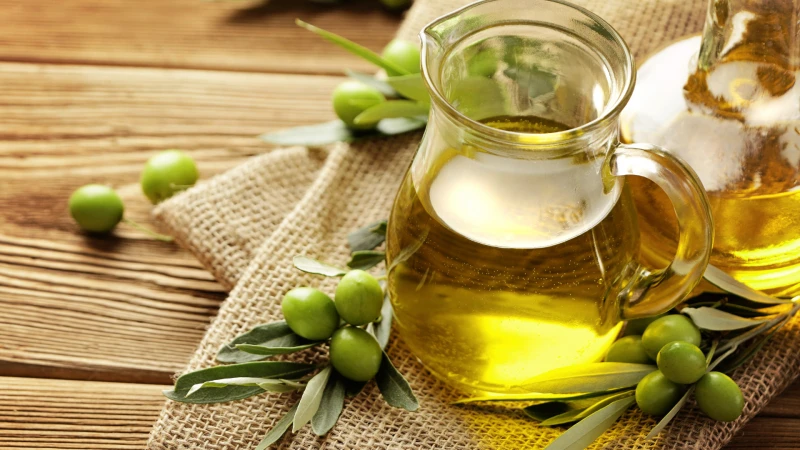
Olive Oil in Northern Cyprus: Tradition, Production, and Unique Quality
In Northern Cyprus, as in the entire Mediterranean, the olive tree is part of the island’s cultural heritage. Olive groves can be found everywhere — from wild forests to well-kept private farms. Locals have been cultivating olives since ancient times, and many trees are hundreds of years old. Some specimens are known to be over 2,500 years old. The ancient trees in the village of Kalkanlı were once a famous attraction for tourists from all over the world — until the devastating fire of 2020.
Despite modern technology, traditional olive oil production methods are still preserved on the island, and small local mills continue to produce some of the highest-quality oils in the region.
How Olive Oil Was Made in the Past
Historically, olive oil was extracted manually:
olives were crushed in a stone press turned by a donkey. This slow process yielded a pure product without heat or chemicals.
Today, the process is automated, but the cold-pressing principle remains unchanged: no synthetic additives, no high temperatures — only mechanical extraction.
How Olive Oil Is Produced at Small Mills in Northern Cyprus
Modern small mills combine tradition and technology to preserve the exceptional quality of the oil. Here’s how the process unfolds — from tree to bottle.
Harvesting
In Northern Cyprus, olives are mostly harvested by hand:
-
special rakes or gentle shakers are used,
-
nets are spread under the trees to prevent fruit damage,
-
the harvest takes place early in the morning while the olives are cool.

Good-quality oil requires healthy, undamaged, not overly ripe olives — the quality of the fruit determines the quality of the final product.
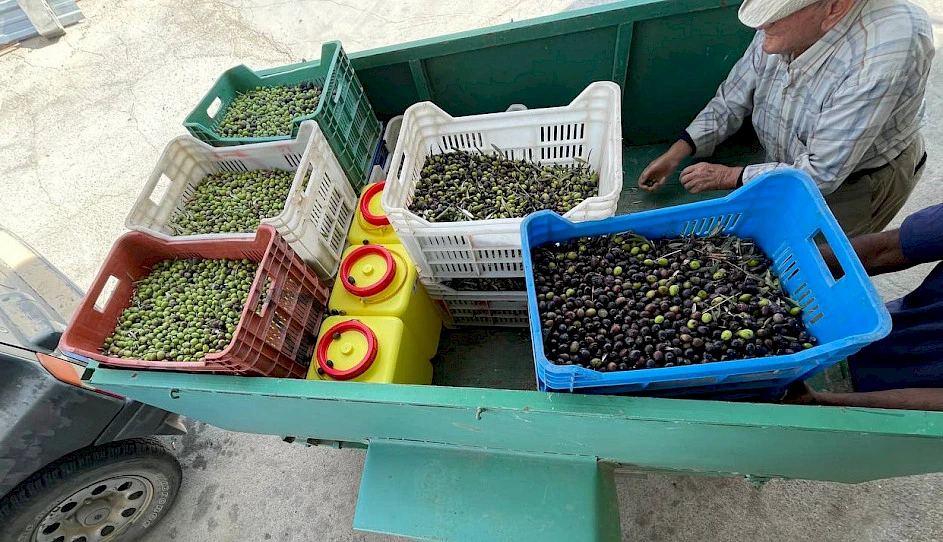
Transport and Sorting
Olives must reach the mill within a few hours — otherwise, they begin to oxidize and lose their aroma.
 |
 |
 |
Then the following steps take place:
-
removal of leaves and branches,
-
manual sorting (a hallmark of small Cypriot mills),
-
careful washing.
 |
 |
 |
Manual work at small mills ensures that only the best olives are used.
Crushing
The cleaned olives are ground — together with their pits — into a thick, aromatic paste.
Malaxation (mixing the paste)
The paste is slowly mixed at a temperature not exceeding 27°C — this is what defines cold pressing.
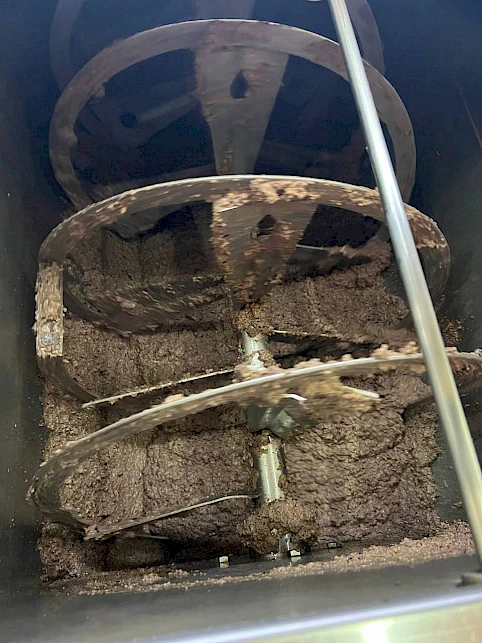
-
the oil droplets combine,
-
the aroma and flavor are revealed,
-
polyphenols and antioxidants are preserved.
Mixing lasts about 30–40 minutes.
Oil Separation
In Northern Cyprus, two main methods are used:
Traditional Press
-
the paste is spread onto mats (called “scourtins”),
-
stacked in layers,
-
pressed,
-
the oil is separated from the water.
Modern Centrifuge
-
the paste is spun at high speed,
-
oil separates from solid particles.
 |
 |
 |
The centrifuge is more hygienic and better preserves the flavor.
Filtration and “Resting”
-
the oil is filtered, or
-
left unfiltered.
 |
 |
 |
Then the oil is stored in dark containers to “rest.”
Bottling
-
glass bottles,
-
metal cans.

How Natural Cypriot Olive Oil Looks
Color
From bright green to golden.
Aroma
-
fresh grass,
-
green apple,
-
tomato leaf,
-
a hint of pepper.
Taste
-
fruity,
-
slightly bitter,
-
a light sting in the throat — a sign of polyphenols.
Sediment
Normal for unfiltered oil.

Why Olive Oil from Small Cypriot Mills Is So Good
-
minimal time from harvest to pressing,
-
manual sorting,
-
pure raw materials without additives,
-
traditional cold pressing,
-
freshness of the product.
Olive Oil in Stores in Northern Cyprus
Since the oil is produced locally, it is not diluted with cheaper oils and is always natural.
Helpful tips:
-
sediment is normal,
-
glass bottles are preferable,
-
prices are lower than imported oil,
-
quality is consistently high.
Olive Oil Directly from Mills in Northern Cyprus
The freshest, tastiest, and most economical option is to buy oil:
-
at small mills,
-
from farms,
-
in seasonal cooperatives.
Here are some verified mills (with Google Maps links):
-
Aydın Zeytinyağı — Güzelyurt area
-
Şirinevler Zeytin Fabrikası — at the foot of the Kyrenia mountain range
-
Cyprolive Zeytinyağı — near Kyrenia
-
Hasan Efendi Zeytinyağı — near Çatalköy
-
Yeniceköy Bardak Zeytinyağı — near Ercan
-
Geçitkale Bardak Zeytinyağı — Geçitkale region
-
Yağcıoğlu Yağ Fabrikası — near Boğaz
-
Mehmetçik Yağ Sanayi — near İskele
Frequently Asked Questions About Olive Oil in Northern Cyprus
What types of olives are used to make the oil?
-
Green — more intense and slightly bitter oil,
-
Black — milder and sweeter.
Where are the oldest olive trees located?
In the Kalkanlı area near Güzelyurt. Some trees are 700–800 years old. Part of the grove survived the 2020 fire.
Are there olive festivals?
The Olive Festival takes place in the first week of October and lasts three days.
Author

I am a person who is not afraid to change life when my heart tells me that something greater lies ahead. I am originally from Belarus. I have journeyed from pedagogical and economic education to the financial sector and many years of work in logistics — a world where everything moves, changes,…