
Rakı in Northern Cyprus — "lion’s milk," traditions, and differences from rakia
Rakı is one of the most recognizable drinks in Turkey and Northern Cyprus. Locals call it "lion's milk" and regard it not merely as alcohol, but as a part of culture and tradition. This drink accompanies celebrations, friendly gatherings, and philosophical conversations under the starry Cypriot sky.
- Rakı Production
- How to Drink Rakı
- Rakı Analogues
- Rakı vs. Rakia — What’s the Difference
- Frequently Asked Questions
Rakı Production
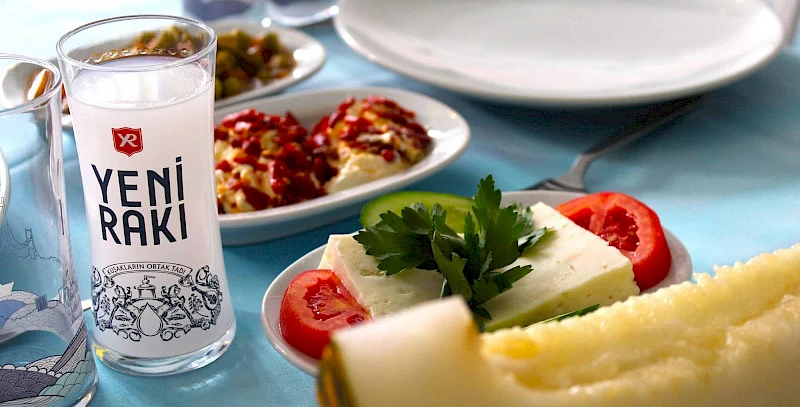
Rakı is made by double distillation of grape spirit with the addition of anise. Depending on the region, figs or plums may also be used as raw materials. However, classic Turkish rakı is grape-based. For example, the Yeni Raki variety is made from raisins, while Tekirdağ Raki is made from fresh grapes.
The first written mention of the drink appears with the Ottoman traveler Evliya Çelebi in 1630. He described how anise-flavored spirits were produced in different parts of the Ottoman Empire and how the drink had already become part of local culture by that time.
Interesting fact: until the late 19th century, rakı was produced exclusively at home. Industrial production began only in the 20th century, when the first licensed distilleries appeared in İzmir and Istanbul.
The alcohol content of the drink is 40–50%. When water is added, rakı turns cloudy and becomes white—hence the nickname "aslan sütü" ("lion's milk").
How to Drink Rakı
Rakı is served chilled in narrow cylindrical glasses. It is sipped slowly, in small mouthfuls, savoring the aroma of anise. Traditionally, it is diluted with water or ice, which gives the drink its characteristic milky hue.
Rakı is not just alcohol, but a component of dining culture. It is served with cold appetizers (meze), fish, or meat. A typical rakı meal includes:
- Meze — olives, cheese, vegetables, pâtés;
- Grilled fish — such as dorado or sea bass;
- Kebab — usually lamb or chicken.
Locals say: "Rakı is drunk not to get drunk, but to contemplate." At the table with this drink, it is customary to converse, discuss life, and listen to music. After each glass, Turkish tea is often consumed—it helps soften the effect of alcohol.
Rakı Analogues
Rakı has many "relatives" in different Mediterranean countries:
- Ouzo — a Greek anise-based drink;
- Pastis — the French variant with Provencal herbs;
- Sambuca — Italian sweet liqueur with anise and coffee;
- Mastika — a Balkan variation with mastic resin;
- Arak — a Middle Eastern analogue, likely the "ancestor" of Turkish rakı.
All these drinks share one thing—the anise aroma and the tradition of unhurried dining.
Rakı vs. Rakia — What’s the Difference
The names are similar, but the drinks are different. Turkish rakı is distilled grape spirit with anise. Balkan rakia is a fruit brandy, usually from plums, apples, pears, quinces, or figs. It may lack anise, and the strength and flavor vary widely.
The main difference lies in production method and aroma: Turkish rakı smells of anise and turns milky-white when diluted with water, while rakia is clear and contains no spices. In Cyprus, both drinks can sometimes be found, especially in areas with Bulgarian and Serbian populations.
Frequently Asked Questions about Alcohol in Northern Cyprus
What other grape spirits can I try?
The drink zivaniya is popular on the island—a Cypriot grape spirit similar to grappa or chacha. It is produced in both the southern and northern parts of Cyprus. Available in stores (for example, products by Loel), and also found as homemade zivaniya made by farmers in mountain villages.
What is the unusual homemade spirit in Cyprus made from?
One of the most original drinks is carob spirit — a product also used to make syrup and desserts. The collection of carob pods is regulated by law. More details can be found in the article about carob.
Where are the wineries in Northern Cyprus?
Despite Muslim traditions, several wineries operate in the northern part of the island — Etel Winery and Elfie’s Winery. Both can be visited with a tour and tasting. Details in the article “Wineries of Northern Cyprus”.
Follow our Instagram and Telegram channel — there we share insights about the traditions, drinks, and cuisine of Northern Cyprus.
Author

I am a person who is not afraid to change life when my heart tells me that something greater lies ahead. I am originally from Belarus. I have journeyed from pedagogical and economic education to the financial sector and many years of work in logistics — a world where everything moves, changes,…