Akrotiri Lake in Cyprus
Akrotiri Lake is one of the most unique natural sites in Cyprus. It combines rare ecosystems, seasonal water bodies, dozens of migratory bird species, and notably — the famous pink flamingos. Below you will find everything you need to know before visiting: from ecology to practical information.
- Key facts about water and ecology
- Biodiversity and flamingos
- Visitor centres
- When to visit
- Protection and modern challenges
- Practical information
Key facts about water and ecology
Akrotiri Lake (Limassol Salt Lake) is the largest inland water body in Cyprus, covering an area of approximately 10.65 km². It is located within the British military bases of Akrotiri and Dhekelia, southwest of Limassol. The lowest point lies 2.7 m below sea level, and its depth rarely exceeds 1 m.
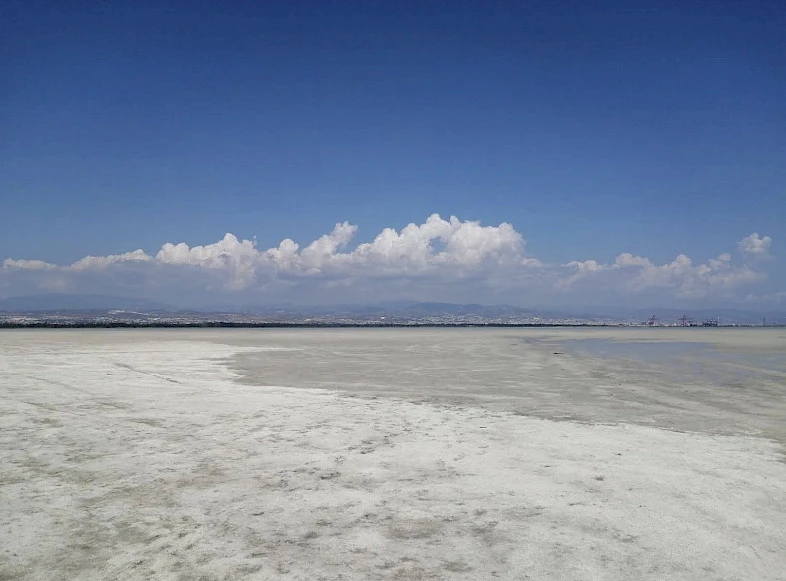
The lake is seasonal: in summer, its bed is covered with a salt crust, while in winter and spring it fills with rainwater and groundwater. Akrotiri plays a key role in maintaining the ecological balance of the entire peninsula.
Biodiversity and flamingos
Akrotiri is recognized as one of the main wetlands of the Eastern Mediterranean. More than 300 bird species have been recorded on the peninsula. It serves as a stopover for migratory flocks traveling between Europe and Africa.
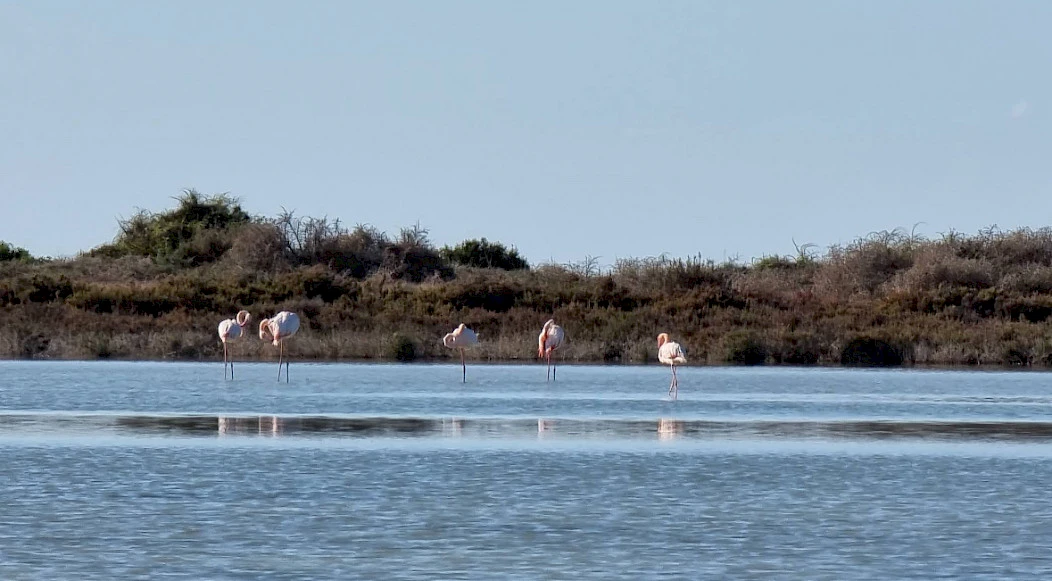
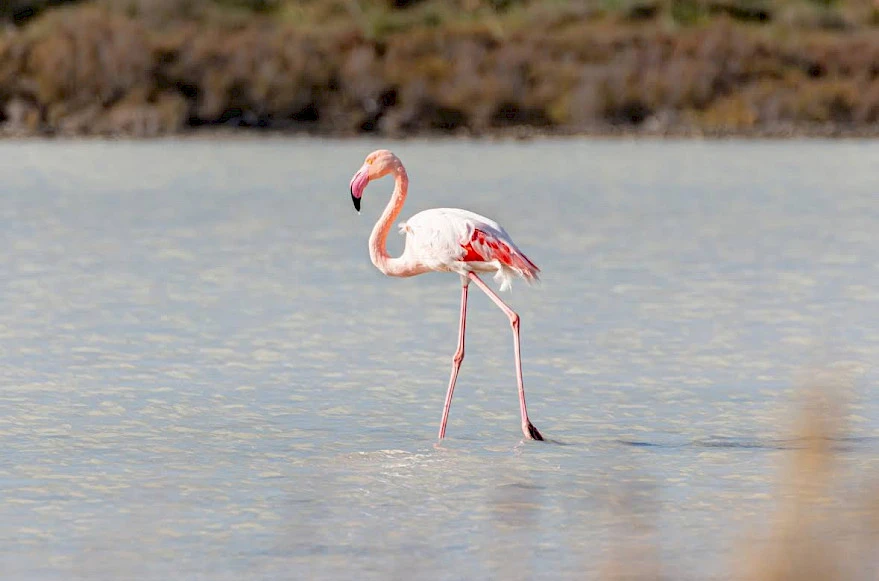
In winter, the lake becomes home to flamingos. Depending on the year, between 2,000 and 20,000 birds have been observed here. However, in January 2025, their number dropped to only 30 — the lowest recorded since monitoring began in 1992. Scientists attribute this to climate change, water level fluctuations, and increased urban development.
Visitor centres
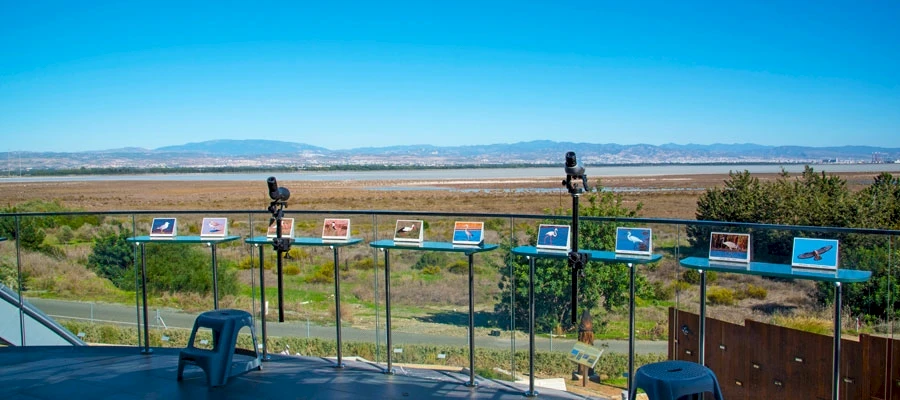
Akrotiri Environmental Education Centre (AEEC) opened in 2004. It features exhibitions, lecture halls, and observation platforms for birdwatching.
Opening hours (2025): Mon–Fri: 07:30–14:00; Sun: 09:00–13:00; Sat and holidays — closed.
Tel.: +357 25 826562. Free admission.
Cyprus Centre of Environmental Research & Education (CYCERE) operates near the Monastery of Saint Nicholas. The centre conducts research and welcomes students and groups for educational tours.
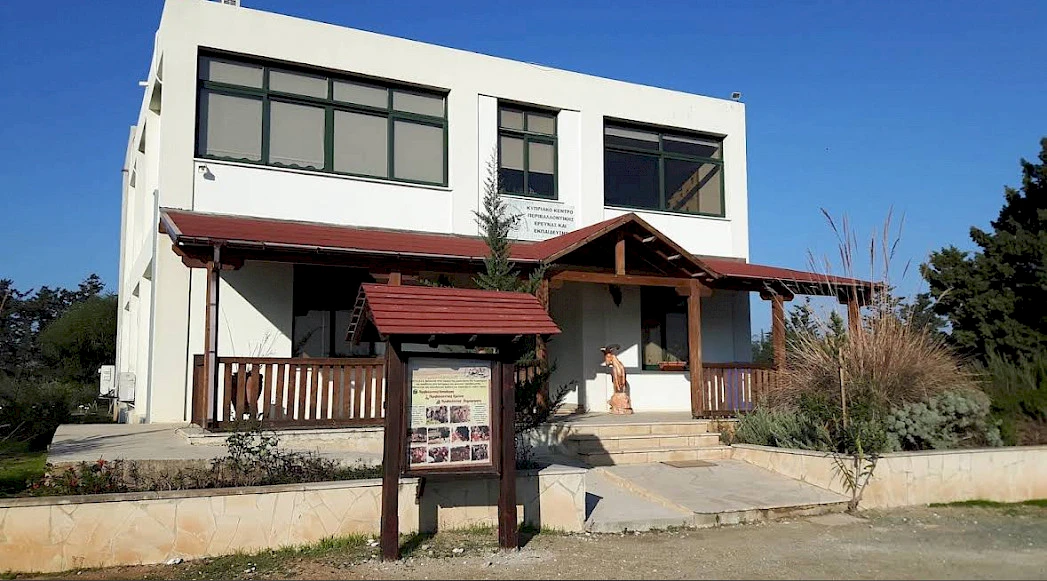
Opening hours (2025): Mon–Fri: 07:30–14:30.
Tel.: +357 25 954954, +357 25 864344.
When to visit
- Winter and spring — the best time for birdwatching and flamingos.
- Summer — the lake dries out, turning into a white salt field.
- Autumn — a transitional period, depending on rainfall.
Protection and modern challenges
Since 2003, the lake has had the status of a Ramsar site. Its territory is also part of the Natura 2000 network as a special protection area for birds and ecosystems.
The main threats to Akrotiri are declining water levels, pollution, changes in water flows, and urban pressure. All of these affect migratory bird populations.
Practical information
Getting there: easiest by car. Public transport does not reach the lake; the nearest stop is My Mall in Limassol, from where you can take a taxi.
What to bring: comfortable shoes, water, a hat, binoculars or a camera.
Nearby: Lady’s Mile Beach and Monastery of Saint Nicholas the Wonderworker (“Cat Monastery”). It is ideal to combine visiting the lake, the monastery, and seaside relaxation.
Author

Education: Graduated from university with a degree in Urban Construction and Architecture, and also completed courses in interior design and graphic design. Professional Experience: From 2016 to 2023, worked in international development and creative companies, focusing on social media…