Cape Greco in Cyprus — What to See and How to Get There
Cape Greco — one of the most picturesque places in Cyprus, where the sea, cliffs, and legends converge. It is a National Park with caves, grottos, and viewpoints offering stunning views. An ideal spot for walks, photography, and enjoying nature.
- Caves
- Viewpoints
- Natural Arches
- Blue Lagoon
- Aphrodite’s Trail
- Church of Cosmas and Damian
- FAQ and How to Get There
Caves at Cape Greco
Along the coastline of the National Park, there are numerous caves, grottos, and indentations formed by the sea and wind. Some of them are especially well-known:
- Zanguli — one of the most scenic caves, accessible via stairs from the church.
- Cyclops Cave — a place shrouded in myths of ancient Greece.
- Shark’s Mouth — a cave whose entrance shape truly resembles an open mouth.
- Pirates’ Cave — according to legend, used as a secret hideout by smugglers.
- Captains’ Grotto — a popular spot for diving and photography.
Viewpoints at Cape Greco
The main viewpoint is Kavo’s View Point. It is located at the highest point of the park, from where, on a clear day, one can see the coasts of Lebanon and Israel. Along Aphrodite’s Trail, there are also dozens of panoramic spots for photos and relaxation.
Natural Arches
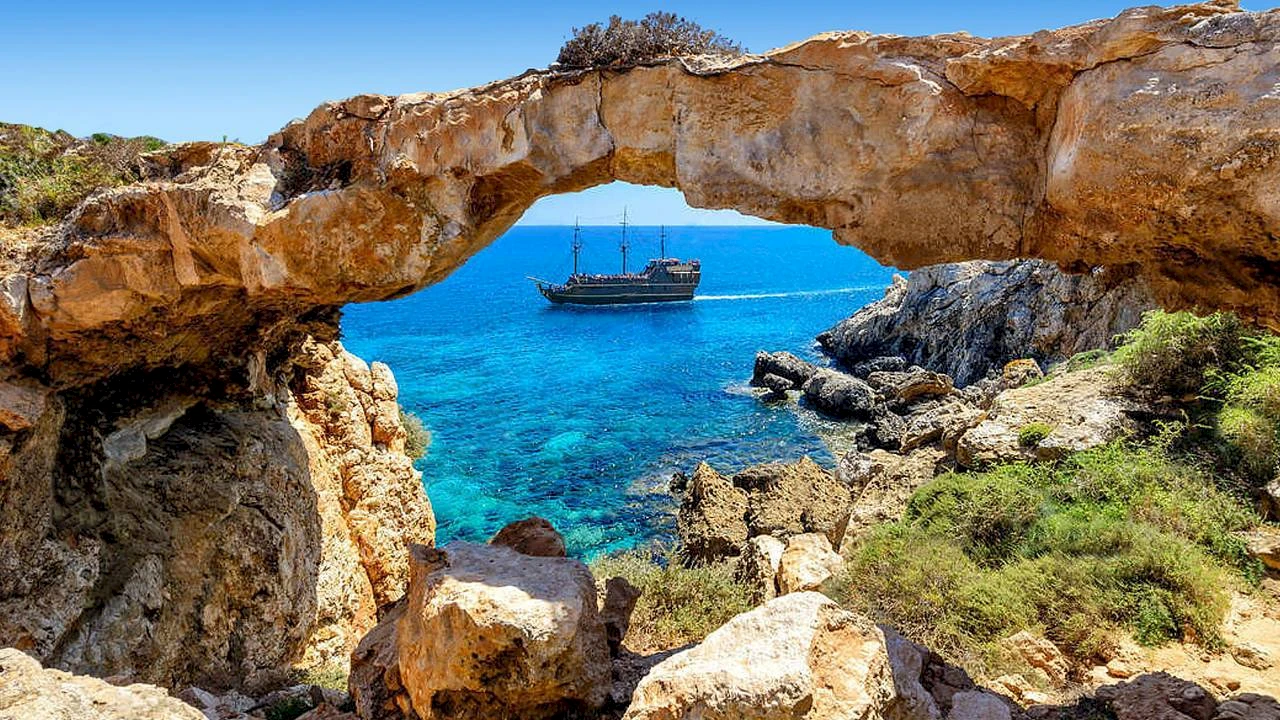
Cape Greco is famous for its stone arches formed by the sea. The most famous is Corvid Arch (Kamara Tou Koraka). Climbing it is prohibited: the structure is fragile and may collapse. Another popular nearby spot is Lovers’ Bridge, located closer to Ayia Napa.
Blue Lagoon
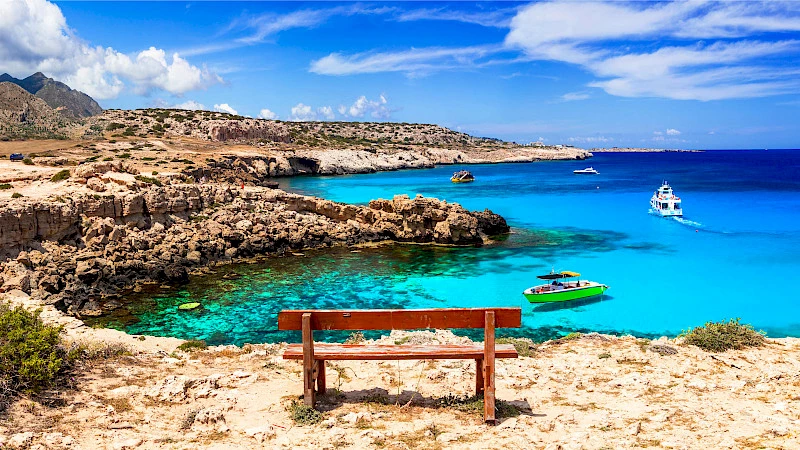
Blue Lagoon lives up to its name: the water here is truly deep blue, and the white cliffs create a striking contrast. This spot is popular with divers and boat tours. Visitors can swim, snorkel, or simply enjoy the views.
Aphrodite’s Trail
Aphrodite’s Trail is a marked walking route that runs through the entire National Park. It connects key attractions, including caves, arches, and the lagoon. Signposts, benches, and viewpoints are installed along the way, making the walk comfortable even for unprepared tourists.
Church of Cosmas and Damian
This small white-and-blue church on the cliff is named after the holy unmercenaries. It has become one of the landmarks of Cape Greco. From here, you can descend via stairs to Zanguli Cave, offering particularly scenic views of the coast.
FAQ and How to Get There
Can you swim at Cape Greco?
There are no equipped beaches within the National Park, but swimming is allowed almost everywhere, especially near the Blue Lagoon and from boats. If you prefer facilities — showers, sunbeds, and cafes — visit the nearby Konnos Bay beach, located north of the park.
Where is Cape Greco located?
The cape is situated between Ayia Napa and Protaras, at the eastern tip of southern Cyprus. It is an area with protected nature and partially British military bases.
How to get to Cape Greco?
By public transport — buses №101 and №102, running between Ayia Napa and Protaras. They stop near the National Park Visitor Center. By car, you can drive along road F337, and parking is available at most attractions.
You can rent a car through Localrent — offers start from 10 euros per day. For more details on car rentals, see our guide to car rental in Cyprus.
To stay updated on events, routes, and attraction news on the island, follow our Telegram channel.
Author

I am a person who is not afraid to change life when my heart tells me that something greater lies ahead. I am originally from Belarus. I have journeyed from pedagogical and economic education to the financial sector and many years of work in logistics — a world where everything moves, changes,…