Botanical Paradise: The Island’s Earliest Wildflowers — Anemones
Spring is the best time of year in Cyprus to enjoy beautiful and untouched landscapes. Cyprus's flora at this time of year is a paradise for botanists and those who love photography or painting. There are almost 2,000 wild flowers on the island, of which 140 are endemic. Considering that the total number of wild flowers in Europe and the Mediterranean does not exceed 2,900, Cyprus is a floral and herbal paradise.
Anemones (most commonly Anemone coronaria) appear after the first steady rains and bloom during the cool season: in most areas from December–January until April, sometimes longer in partial shade and at higher altitudes. Seeing them is easiest in open fields — for example in Athalassa Park (Nicosia), at the foothills with winter greenery, and also on the Akamas Peninsula.
- Types of anemones
- When anemones bloom in the Republic of Cyprus
- Where to see anemones in nature
- Other early and spring flowers
- "Cyprus Orchid": Ophrys bee orchids
- How to view flowers without harming nature
- Glossary
- FAQ

Types of anemones
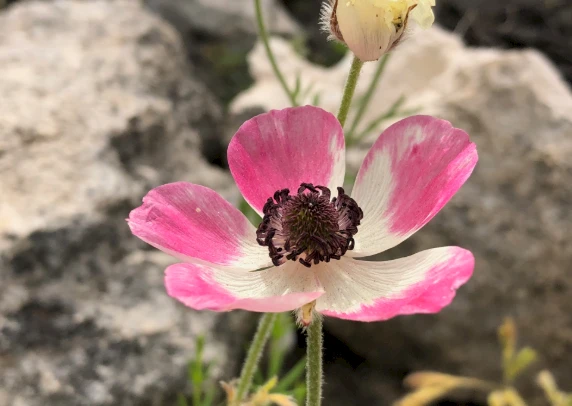
The word "anemone" unites many species. In the Republic of Cyprus, "anemone" most often refers to the Crown Anemone (Anemone coronaria): it is the one that produces bright "carpets" of red, white, lilac, and blue flowers.
For practical purposes, it is convenient to divide anemones as follows:
- Mediterranean tuberous (including Anemone coronaria) — suitable for flower beds, pots, and cutting; active during the cool season.
- Woodland/groundcover — usually prefer partial shade and moister soil; in the Republic of Cyprus, they are typically grown in sheltered spots (avoiding overheating and drying out).
- Autumn (Japanese and hybrids) — bloom later but handle hot dry summers worse without regular watering and mulch.
When anemones bloom in the Republic of Cyprus
In the climate of the Republic of Cyprus, anemones "spring to life" after the first steady rains: they grow leaves in the cool and bloom from winter to spring. The peak depends on the weather of a specific year, altitude, and sun exposure: they finish blooming faster in sunny open areas and last longer in partial shade.
| Period | What happens | Comment |
|---|---|---|
| November – December | Start of green growth | After rains, with cool nights |
| December – April | Flowering | Timing varies by year and district |
| April – May | End of flowering, seed ripening | They finish faster in the sun |
| May – September | Dormancy | The above-ground part usually disappears in the heat |
Where to see anemones in nature
Anemones are found in various parts of the Republic of Cyprus, especially where green cover remains in winter and spring: open fields, forest edges, rocky slopes, and areas with soil that has not dried out. They are often seen on winter hiking trails in natural areas (for example, on the Akamas Peninsula), in the Troodos Mountains, as well as along rural roads and on uncultivated plots after the rains.
If you are planning a trip specifically "for the flowers" and want to add local context to your walk (routes, viewpoints, safe stopping points), it is sometimes convenient to check excursion and walking options with guides: Tripster or Sputnik8.
To see more flowers, plan your walks for the period after rainy weeks: in the cool season, the flowering "window" is wider than in spring under the hot sun.
Other early and spring flowers in the Republic of Cyprus
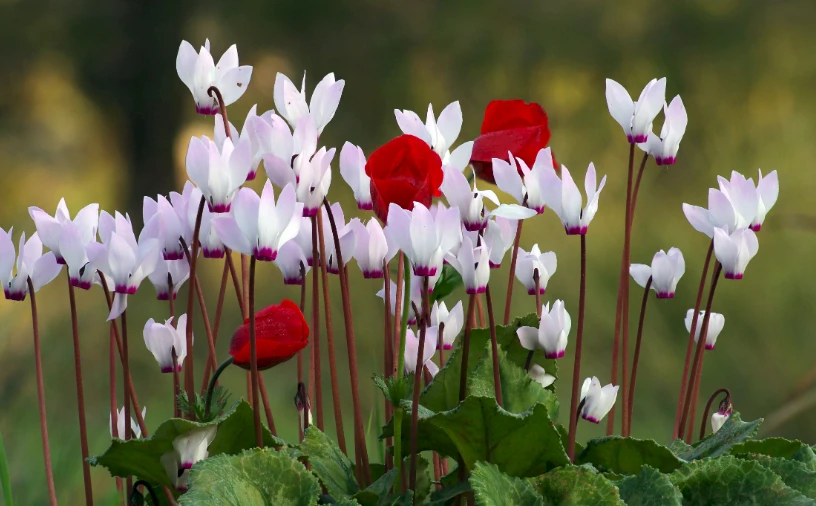
- Cyprus Cyclamen (Cyclamen cyprium) — usually blooms in autumn and early winter, prefers shady and moister places.
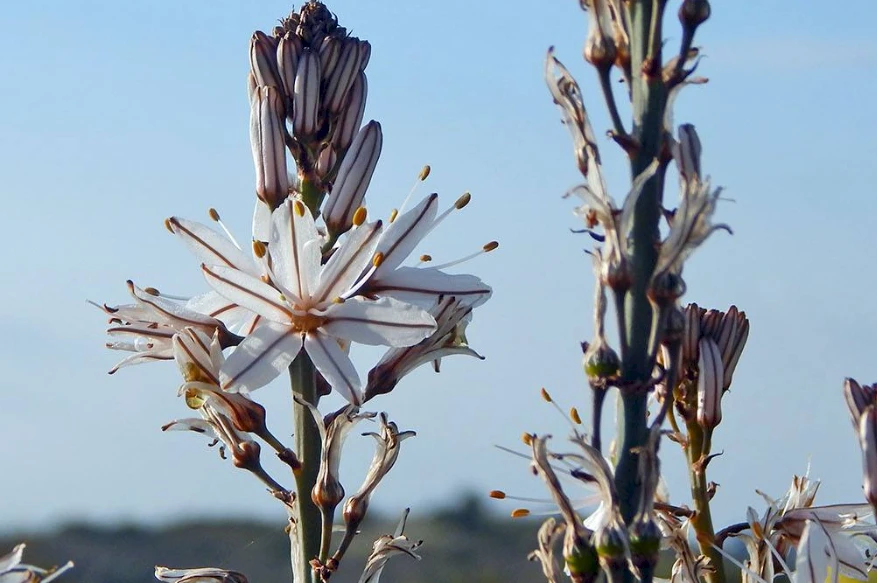
- Asphodel (Asphodelus) — prominent tall "candles"; certain species can bloom from late winter and through spring (depending on the species).
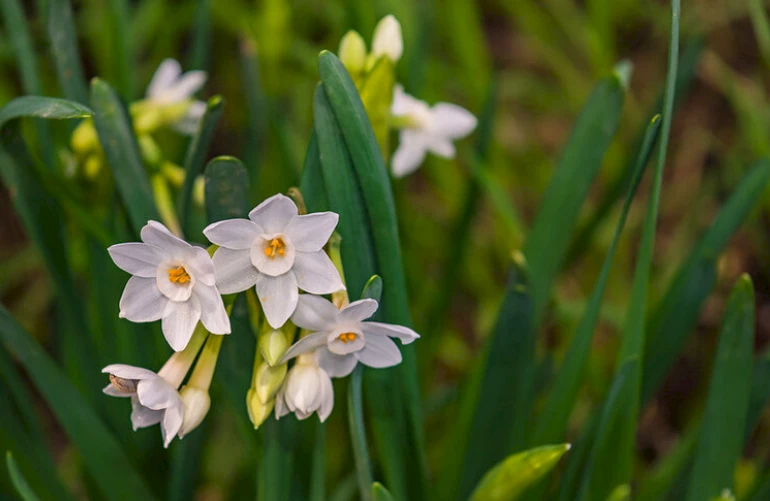
- Daffodils (wild species) — appear in winter and early spring after the rains.
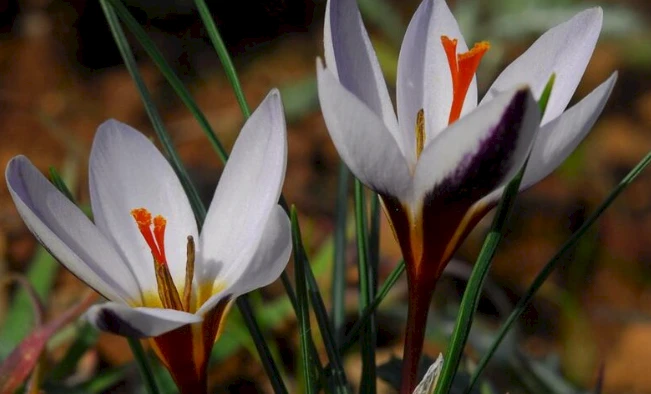
- Crocuses — early cool-season flowers, more often noticeable in cooler areas and at higher altitudes.
- Muscari (grape hyacinth) — small blue "brushes"; often seen in nature in spring, frequently near other wild plants.

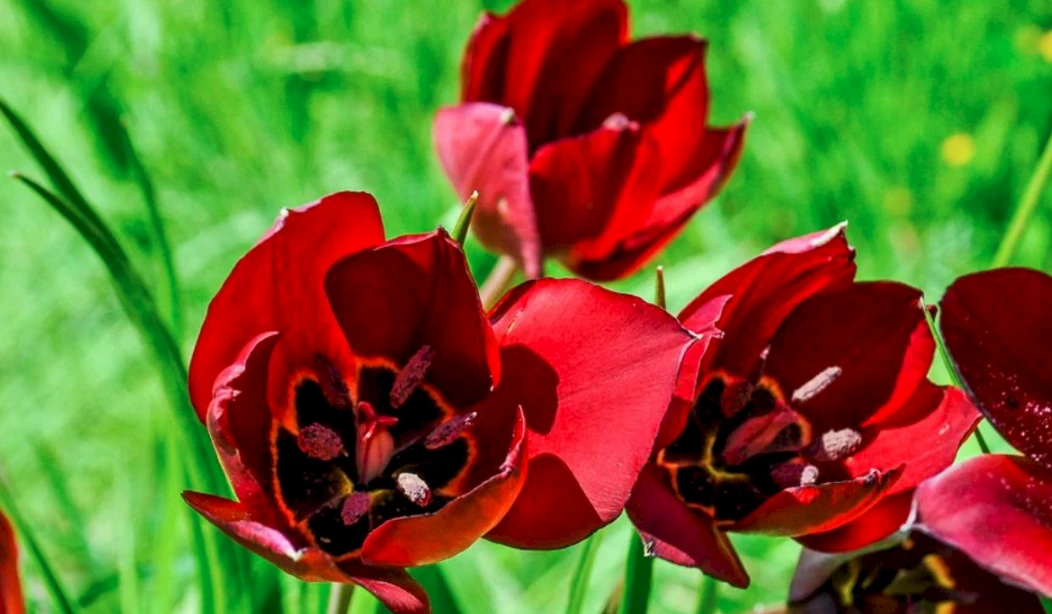
- Wild tulips (e.g., Tulipa agenensis) — short spring flowering, usually in March–April, depending on the weather.
"Cyprus Orchid": Ophrys bee orchids
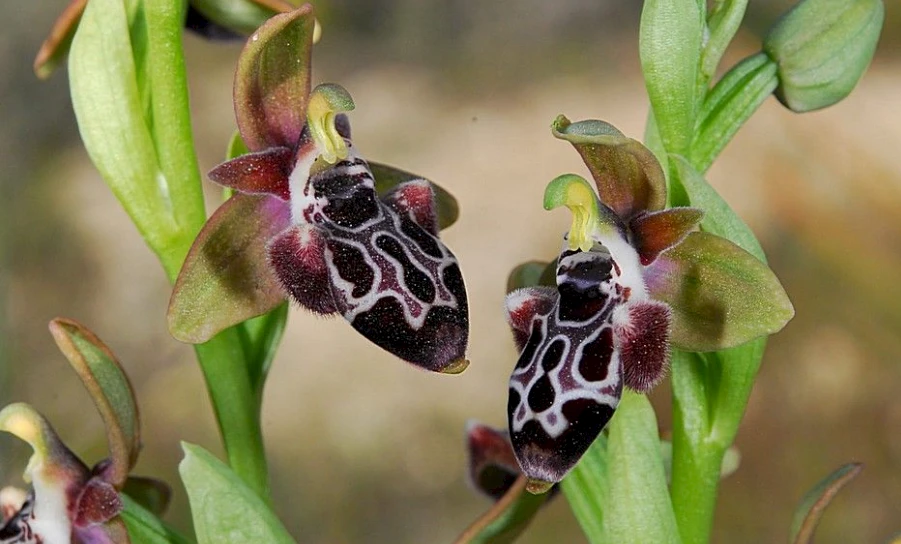
"Cyprus orchid" often refers to endemic (meaning found in the wild only on the island) species of bee orchids of the genus Ophrys. The most famous is Ophrys kotschyi: its flower is designed to attract pollinating insects by "deception" (in shape and scent).
In the Republic of Cyprus, these orchids usually appear in late winter and spring (roughly February–April), on sunny slopes and areas with limestone soils. These are rare plants: it is best not to touch or pick them—observe and photograph them from the trail.
How to view flowers without harming nature
- Stay on the trails and do not step into "carpets" of flowers: trampling significantly reduces the plants' chances of producing seeds.
- Do not pick and certainly do not dig up wild plants: some species may be protected, and digging almost always destroys the plant.
- If you plan to follow a route and rely on maps/navigation, it is more convenient to check in advance that your internet will be stable; sometimes an eSIM helps, for example Drimsim.
- For long walks and trips, some prefer to arrange travel insurance in advance; options can be compared via Tripinsurance.
- If you want a "bouquet effect" at home, it is safer to plant tubers/bulbs from garden centers than to move plants from the wild.
Glossary
- Geophyte — a plant that survives the unfavorable season as an underground organ (tuber/bulb/rhizome), while the above-ground part may disappear.
- Tuber — a thickened underground storage organ from which the plant grows during the growing season (in tuberous anemones).
- Endemic — a species that occurs in nature only in a limited region (for example, only on an island).
- Dormancy period — a phase of the life cycle when the plant stops active growth; for many Mediterranean species, this occurs during the hot summer.
FAQ
When is the best time to see anemones in the Republic of Cyprus?
A practical guideline is from January to March, and in some years and areas, from December to April. There are usually noticeably more flowers after rainy weeks.
Where is the highest chance of seeing "fields" of anemones?
In open areas with winter greenery: fields, forest edges, uncultivated lands, and rocky slopes. Good spots are often found on trails in natural areas (including the Akamas Peninsula) and along rural roads.
Can I transplant anemones from nature to my garden?
It is not recommended: digging almost always damages the plant, and some wild species may be protected. It is better to use tubers from garden centers for your garden.
Why do anemones "disappear" in summer?
For many Mediterranean geophytes, summer is a period of dormancy: the above-ground part dies back, and the tuber remains in the soil until the next cool season.
Author

I am a person who is not afraid to change life when my heart tells me that something greater lies ahead. I am originally from Belarus. I have journeyed from pedagogical and economic education to the financial sector and many years of work in logistics — a world where everything moves, changes,…
You may also be interested in:
- SafeCY in the Republic of Cyprus: How to Find the Nearest Shelter on the Map
- Pitsilia in Cyprus: Culinary Traditions and Famous Meat Delicacies
- Public workshops for children and adults O Topos en oi Anthropoi (“The Place Is People”) — Republic of Cyprus 2026
- Valentine’s Day Gift Ideas in the Republic of Cyprus
- Minimum wage in the Republic of Cyprus