
F-16s in Northern Cyprus: A Signal of Strength or a New Challenge for Negotiations?
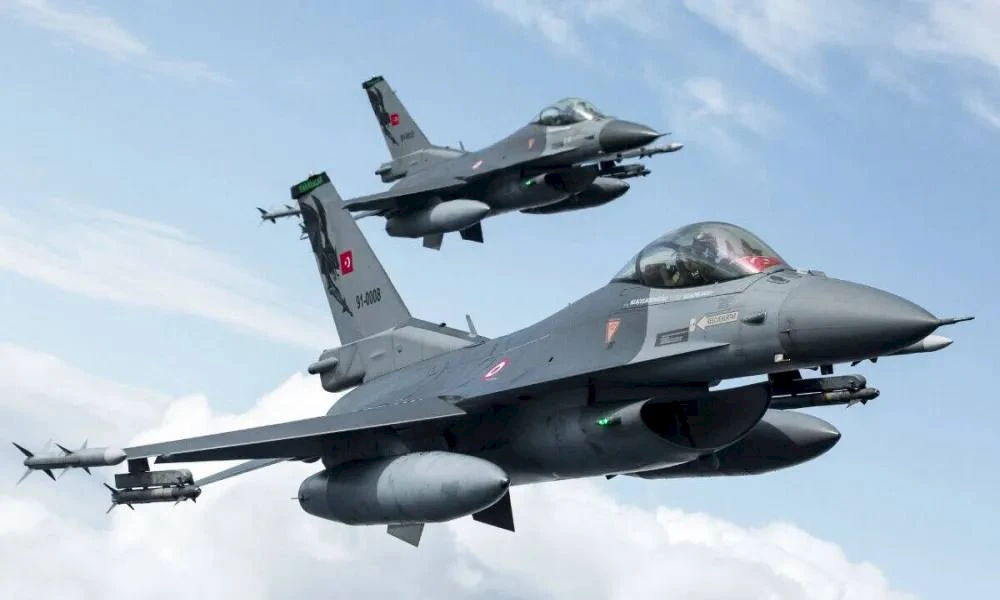
The deployment of Turkish F-16 Fighting Falcon fighter jets in the territory of the unrecognized Turkish Republic of Northern Cyprus has become one of Ankara's most discussed political moves amid regional tensions.
Turkish politicians explain this step as a necessity to protect Turkish Cypriots, while the reaction in Nicosia has turned out to be far more restrained than many observers expected.
Ankara's Position: Protecting Turkish Cypriots
The Speaker of the Grand National Assembly of Turkey, Numan Kurtulmuş, stated that the F-16 deployment is intended to support Turkish Cypriots and prevent potential actions by the government of the Republic of Cyprus.
According to him, Ankara seeks to prevent the "Greek Cypriot administration of Southern Cyprus" from taking advantage of the "uncertain situation" in the region.
Kurtulmuş also linked this move to the general instability in the Middle East. In his view, mutual strikes between the US, Israel, and Iran could indirectly turn the northern part of Cyprus into a potential target.
Ankara, he emphasized, is closely monitoring developments and taking measures to ensure that regional tensions do not affect the Turkish Cypriot community.
Political Message: "Two Peoples — Two Sovereignties"
The Turkish side continues to promote the position that two peoples and two sovereign entities exist on the island.
Kurtulmuş stated that denying this reality "cannot be a solution for the island," and emphasized the need for international recognition of the TRNC and the intensification of diplomatic activity through inter-parliamentary groups.
Separately, he mentioned Cyprus's presidency of the Council of the European Union, noting that Ankara and the Turkish Cypriot side are keeping a close watch to ensure that international platforms are not used against Turkey.
Nicosia's Restrained Reaction
Against the backdrop of such tough rhetoric, Nicosia's reaction has been relatively calm. There were no sharp military statements or demonstrative counter-steps in the public sphere, which some analysts interpret as an attempt to avoid additional escalation at a time when the region is already in a state of tension.
- On one hand, such restraint may be a sign of pragmatism: the authorities of the Republic of Cyprus are not interested in military rhetoric, especially amid instability in the Eastern Mediterranean.
- On the other hand, questions are being raised in expert circles about whether the strengthening of Turkey's military presence in the north of the island will become a new obstacle to restarting negotiations on the Cyprus settlement.
Risk to the Negotiation Process
Negotiations for the settlement of the Cyprus issue, held under the auspices of the United Nations, have been in a state of stagnation for many years. The deployment of fighter jets in the north of the island could be perceived as:
- a demonstration of force,
- a signal of consolidating the existing status quo,
- or an element of regional security amid instability.
Each of these interpretations affects negotiation prospects differently. If military reinforcement is seen as a tool of pressure, it could further complicate the dialogue. However, if it is explained solely by external threats related to the regional situation, its impact on the negotiations may be limited.
Is Another Interpretation Possible?
Some analysts suggest viewing the Republic of Cyprus's current restrained reaction differently — as a gesture of political non-confrontation, which could potentially become an element of confidence-building measures.
Proponents of this view point out that in a hypothetical united Cypriot state (federation), the island's security would inevitably be a common task. From this perspective, strengthening defense, even if it occurs on one part of the island, could be interpreted not as a threat but as a reaction to external risks.
Not a Time for Negotiations or a Chance for New Logic?
Today, amid the war around Iran and general instability in the region, many diplomats believe that the issue of restarting Cyprus negotiations has temporarily moved to the background. However, the history of the Cyprus conflict shows that periods of tension have sometimes opened a window for new diplomatic formulas.
In this context, the question remains open:
- will the deployment of F-16s and air defense systems become another barrier between the island's two communities,
- or will Nicosia's calm reaction eventually allow this episode to be viewed as part of a broader conflict prevention strategy.
Author

Born in the city of shipbuilders, Mykolaiv (Ukraine). Currently living in Moscow. Diplomat in reserve. More than 10 years of experience in the Mediterranean region (Greece, Cyprus). Until 2015, First Secretary of the Russian Embassy in Cyprus. Fluent in Greek and English. Completed civil service in…
