
Cyprus on the verge of gas transformation: from importer to exporter
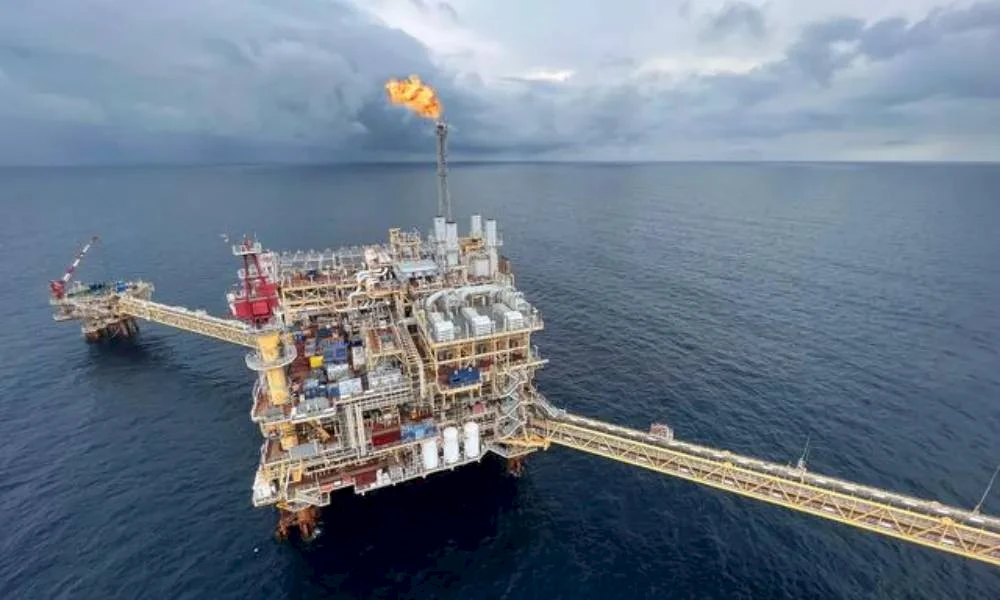
The Republic of Cyprus could radically change its role on the region's energy map in the coming years. Until recently, the country was almost entirely dependent on fuel imports, but today it is preparing to start producing its own natural gas and begin exporting to Europe.
But how realistic are these plans? And will Cyprus be able not only to profit from gas but also to ensure its own energy security?
Energy dependence: the island's vulnerability
Today, Cyprus remains one of the most energy-import-dependent countries in the EU. Electricity here is primarily produced from fuel oil and diesel — expensive and environmentally unfriendly sources.
The transition to natural gas should change the situation. According to estimates, the country's annual demand will be about 1 billion cubic meters of gas — a relatively small volume by global standards, but critically important for the national economy. Of particular concern is the instability of global supplies. Key energy transport routes pass through narrow maritime "bottlenecks" — such as the Strait of Hormuz and the Bab-el-Mandeb Strait. Any conflicts in these zones could sharply disrupt fuel supplies.
Against this backdrop, developing its own gas production for Cyprus is not just an economic opportunity, but a matter of national security.
Which gas fields have been discovered in Cyprus?
In the exclusive economic zone of the Republic of Cyprus, four commercially promising fields have already been discovered, confirming the high potential of the island's subsoil:
- "Aphrodite";
- "Cronos";
- "Glaucus";
- "Pegasus".
A special role is played by Block 10, where ExxonMobil and QatarEnergy discovered reserves of around 7 trillion cubic feet (about 200 billion cubic meters). In total, Cyprus's resources are estimated at more than 300 billion cubic meters of gas. Even if only half is extracted, it will be enough for the country for more than 100 years of its own consumption.
When will the first gas flow?
The project closest to launch is the "Cronos" field. It is expected that:
- production will begin in late 2027 – early 2028;
- gas will be exported through Egypt's infrastructure.
Following it, other facilities will come online: "Aphrodite" could become operational by 2031–2032, and Block 10 projects closer to 2033. This means that by the beginning of the next decade, Cyprus will be able not only to supply itself but also to steadily export raw materials.
Export first
Interestingly, Cyprus's current strategy focuses not on the domestic market but on exports. According to plans, up to 80% of the gas produced will be sent to Europe. This is understandable: the EU is actively looking for replacements for traditional suppliers, and Cypriot gas could become part of the energy diversification strategy.
For Cyprus, this is a chance to gain significant revenue and increase its political significance. But there is also a risk: prioritizing exports could slow down the development of the domestic gas market.
Will Cyprus be able to completely stop gas imports?
Cyprus is capable of completely eliminating gas imports by 2030–2032, provided all discovered fields are put into operation. Theoretically, this can be done quite quickly: with the launch of "Cronos" in 2028, the country will be able to partially cover its needs. However, much depends on political decisions — primarily on what share of production remains within the country.
The bottleneck: the Vasilikos terminal
The key element of the entire gas strategy is infrastructure. And here Cyprus has a problem. The LNG terminal project in the Vasilikos area, started back in 2018–2019, has still not been completed. The reasons were past political disagreements and arbitration with the contractor.
This terminal is necessary for:
- importing gas during the transition period;
- reducing electricity prices.
Currently, authorities on the island are negotiating with new partners, including companies from the UAE. If the process can be accelerated, a launch is possible as early as 2027–2028.
Gas as an opportunity and a challenge
Cyprus today is in a unique situation. On one hand, there are significant resources and interest from Europe. On the other, there are infrastructure delays and complex geopolitics. The main question is how to properly manage this resource. Experts agree on one thing: it is important for Cyprus not to repeat the mistakes of other countries where exports brought in revenue but did not solve domestic problems.
Key conclusions:
- Cyprus has gas reserves of over 300 billion cubic meters, covering the country's needs for a century ahead.
- The first industrial production at the "Cronos" field is expected in 2027–2028.
- 80% of the extracted resource is planned to be exported to EU countries.
- Completion of the Vasilikos terminal is a critical condition for energy independence in Cyprus.
Author

Born in the city of shipbuilders, Mykolaiv (Ukraine). Currently living in Moscow. Diplomat in reserve. More than 10 years of experience in the Mediterranean region (Greece, Cyprus). Until 2015, First Secretary of the Russian Embassy in Cyprus. Fluent in Greek and English. Completed civil service in…
