
Household waste volume increases in the EU
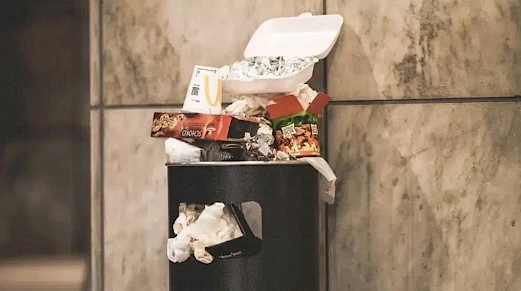 In 2024, European Union countries averaged 517 kg of municipal waste per person. This is 6 kg more than in 2023 (511 kg). Compared to 2014, the figure has increased by 38 kg, or approximately 8%.
Statistics show significant differences between EU countries. The highest amounts of waste per person are generated in:
- Austria — 782 kg per person (2023 data),
- Denmark — 755 kg,
- Belgium — 699 kg.
The lowest figures were recorded in:
- Romania — 305 kg per person (2023 data),
- Estonia — 375 kg,
- Poland — 387 kg.
Since 2014, the volume of household waste per person has increased in 20 EU countries. The most notable increases were observed in:
- Belgium (+274 kg),
- Czechia (+228 kg),
- Austria (+217 kg).
At the same time, the largest reductions in waste were recorded in:
- Netherlands (–54 kg),
- Denmark (–53 kg),
- Finland (–25 kg).
Almost half of waste is recycled
In 2024, an average of 248 kg of waste per person was recycled in the EU. This represents 48.1% of the total waste volume.
For comparison:
- in 2023, 48.0% of waste was recycled (246 kg per person),
- in 2014 — 43.0% (208 kg per person).
Municipal waste refers to household waste and similar waste, but does not include industrial, agricultural, medical, construction, and other specialized types of waste.
Author

I am originally from St. Petersburg — a city with a unique character and rhythm. My professional life began rapidly: at just 16, I plunged into the world of global events. The World Cup, the roar of Formula 1 cars in Sochi, the energy of VK Fest, and the backstage of Fashion Week — I always…
