How long the beach season lasts in the Republic of Cyprus
In the Republic of Cyprus, the swimming season for most people begins in late May and lasts until early October: in May, the air is already warm, but the sea is still cool after winter, while in October, the outdoor temperature is usually more comfortable while the sea retains its warmth. If you are looking at weather suitable for the beach without necessarily swimming, the "warm season" often stretches from approximately April to November.
If you are planning a trip, resolve practical matters in advance: internet at the beach and on the road (eSIM) and travel insurance often simplify holiday organization. eSIM: Drimsim. Insurance: Tripinsurance.
- Swimming season
- Warm time of year for the beach
- Things to do out of season
- Glossary
- Frequently Asked Questions
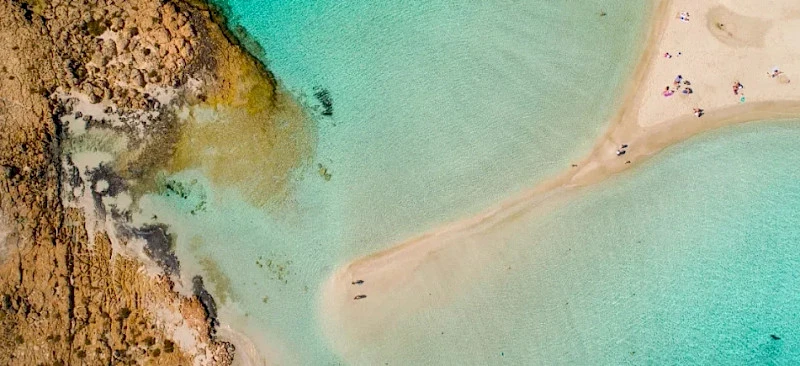
Swimming Season in the Republic of Cyprus
Swimming is generally more or less comfortable from May to October, with the most stable conditions occurring from late May to late September. In early May, the air often feels like summer already, but the sea warms up more slowly after winter. In October, conversely, the heat subsides, but the water still holds the warmth gathered during the summer.
Guidelines for Air and Sea Temperatures by Month
Values depend on the specific coast (the east is usually warmer, the west slightly cooler), wind, and currents. The table below provides practical guidelines for trip planning.
| Period | Sea, °C | Daytime Air, °C |
|---|---|---|
| April | about 18–19 | about 21–23 |
| May | about 20–22 | about 24–27 |
| June | about 23–25 | about 28–31 |
| July–August | about 26–28 | about 32–36 |
| September | about 26–27 | about 29–33 |
| October | about 24–26 | about 26–29 |
| November | about 21–23 | about 21–24 |
If you are sensitive to water temperature, aim for late June to September. If avoiding intense heat is more important, late May–June and September–October are often more comfortable.
Related topic: when the beach season starts in the Republic of Cyprus.
Warm Time of Year for the Beach
If a beach holiday for you means not only swimming but also walks by the sea, cafes on the promenade, and sunny days, then there are even more suitable months. On the coast, the warm period often begins in April and ends in November. However, evenings in transitional months can be cooler than they seem during the day, so a light windbreaker or hoodie is usually not out of place.
If you are planning your trip by month: weather in the Republic of Cyprus, May, June, July.
Things to do Out of the Beach Season
Outside the swimming season in the Republic of Cyprus, it is easier to plan active recreation: fewer people at popular spots and more comfortable temperatures for long walks and trips.
If you want to travel around beaches and viewpoints at your own pace, it is more convenient to rent a car: Localrent.
- Troodos Mountains. Trips to the mountains, hiking trails, viewpoints; in winter — the chance to find snow and winter activities.
- Cultural Routes. Museums, archaeological parks, traditional villages, gastronomic festivals.
- Diving and Snorkeling Without the Crowds. In cooler months, spots are usually less crowded (though be mindful of waves and visibility).
- Cycling. Riding is noticeably more comfortable in spring and autumn than in the peak of summer heat.
Excursion and non-beach activity ideas: Tripster.
Glossary
- Blue Flag. An international environmental award for beaches and marinas based on water quality, safety, infrastructure, and environmental management.
- Swimming Season. The period when most people find it comfortable to actually swim in the sea (usually depends on water temperature and wind).
- Beach Season. A broader term: weather suitable for relaxing by the sea, sunbathing, and walking, even if you don't plan to swim.
Frequently Asked Questions
When is the best time to go to the Republic of Cyprus to be sure of swimming?
If you want the most predictable warm water, late June, July, August, and September are usually best. In May and early June, the sea can be cooler, especially after windy days.
Can you still swim in October?
Yes, you often can: the sea is usually still warm, and the air is no longer as hot. However, there is a higher chance of wind and short weather "breaks" in October, so it is better to allow for some flexibility in your schedule.
Where is the water usually warmer — in the east or the west?
The east coast (Ayia Napa and Protaras areas) often feels warmer and has calmer waves. The west (Paphos area) can be slightly cooler and windier — this is important to consider when choosing a location in May or October.
Which beaches are generally most comfortable for children?
Sandy beaches with a gradual entry into the water and protected bays without strong waves are usually more convenient. A practical criterion is the presence of lifeguards, showers, toilets, and shade nearby.
What should I look for besides sea temperature?
Pay attention to the wind (it affects waves and the feeling of chill), cloud cover, humidity, and the time of day: water feels cooler in the morning and evening than during the day. For families with children, beaches in bays and visiting the sea in the afternoon are often more convenient.
What is the "Blue Flag" and why does it matter to a tourist?
It is an international labeling for beaches and marinas. For a tourist, it is a quick indicator that the beach usually adheres to standards for water quality, safety, and infrastructure (e.g., information boards, cleaning, lifeguards during the season).
Do I need insurance for a beach trip?
If you are visiting as a tourist, insurance usually helps cover medical expenses and unforeseen situations. You can check options here: Tripinsurance.
Author

I am a person who is not afraid to change life when my heart tells me that something greater lies ahead. I am originally from Belarus. I have journeyed from pedagogical and economic education to the financial sector and many years of work in logistics — a world where everything moves, changes,…
You may also be interested in:
- When the beach season starts in the Republic of Cyprus
- Weather in the Republic of Cyprus by month: air and sea temperature, precipitation
- Weather in Cyprus in July — air and sea temperature, precipitation, climate
- Weather in Cyprus in June — air and water temperature, precipitation, climate
- Weather in Weather in Cyprus in May — air and sea temperature, precipitation, and climateCyprus in May