Stifado in Cyprus — what it is, ingredients, and a simple recipe
Undoubtedly, stifado is a culinary legend of Cyprus and the entire Greek world. It is a rich stew of meat in a tomato-wine sauce with “warming” spices and plenty of onions. Below, we explain what this dish is, which ingredients are needed, and how to make stifado at home so that it is truly aromatic (and even tastier the next day).
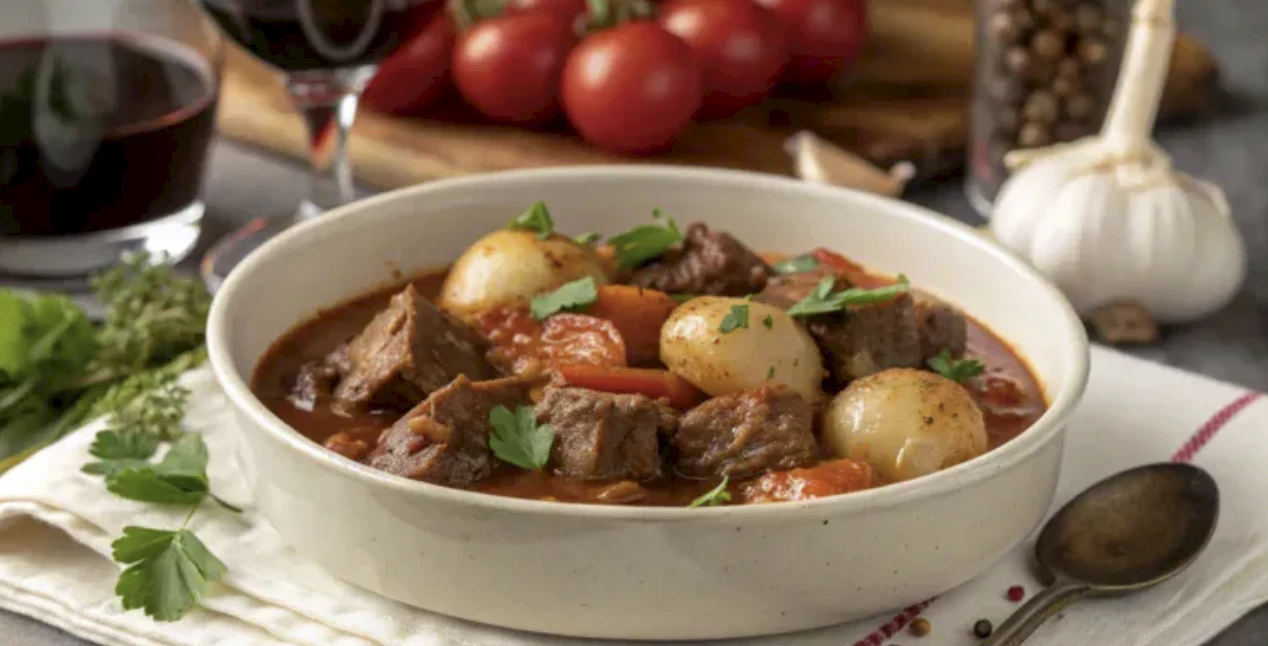
What is stifado
Stifado is a hearty and aromatic stew that perfectly warms you on cool days. It is most often made with beef (sometimes veal or rabbit), tomatoes, red wine, onions, and spices such as cinnamon and cloves. The dish is slowly braised, developing a rich flavor and appetizing aroma.
It is one of those classic dishes often served in Cyprus as a family Sunday lunch. In the past, stifado was cooked in a home wood-fired oven; today it is prepared on the stove, in the oven, or in a multicooker. And an important bonus: stifado usually tastes even better the next day — the sauce “matures” and the spices develop more depth.
How stifado differs from a regular stew: the characteristic “bouquet” comes from the combination of wine, tomatoes, and warm spices, as well as a large amount of onions (often close to the weight of the meat).
Ingredients for beef stifado
Stifado is unique in the sense that instead of an abundance of fresh herbs, it typically uses “warming” spices, similar to mulled wine. Still, it is primarily a winter, hearty dish. Here’s what you will need.
Meat
Avoid pre-cut stew meat, as it often consists of different pieces that cook unevenly. Instead, buy a suitable whole piece (such as shoulder, neck, or rump) and cut it into cubes. You can also ask your butcher to prepare the meat for stewing.
Onions and garlic
Traditionally, white pearl onions, about the size of a small ball, are used for this recipe. Their flavor is milder and sweeter than regular onions, making them perfect for stewing. Garlic adds a slightly sweet and salty note to the dish.
Olive oil
Greek olive oil gives the most authentic flavor, but any quality extra virgin oil you have will work.
Red wine
Choose a full-bodied wine — ideally one you would enjoy drinking with the meal. Often, the same wine is used for both cooking and serving.
Cognac or brandy
These add an amazing depth of flavor. If you prefer to skip them, substitute with 3 tablespoons of red wine vinegar.
Tomato paste and tomatoes
Always lightly fry the tomato paste in olive oil to caramelize it and develop a deeper flavor. If using canned tomatoes, choose ones that can be easily crushed with the back of a spoon. Alternatively, use fresh, very ripe tomatoes.
Spices
Warming spices — bay leaf, cinnamon, and cloves — truly “make” the dish. Salt and pepper enhance the flavor. Optionally, add allspice berries or a bit of nutmeg.
Easy way to cook beef stifado
Although this classic dish boasts deep flavors, it is surprisingly simple to make. Of course, there are many variations, but we chose a method that doesn’t require extensive prep time.
- In a deep pan or heavy-bottomed pot, brown the meat in olive oil. Work in batches so as not to overcrowd the pan: adding all the meat at once will prevent proper browning.
- Caramelize the onions. When the meat is browned, remove it and add the pearl onions. They will absorb the meat’s aroma, and the released moisture will help deglaze the pan.
- Add spices, salt, pepper, and tomato paste. The spices and paste need heat contact to release their full aroma.
- Return the meat to the pot and mix well so it is coated with spices.
- Pour in the wine and cognac (or brandy). Cook briefly, stirring occasionally, to evaporate most of the alcohol. Then add the canned (or fresh) tomatoes.
- Cover the pot and simmer over low heat. Monitor the temperature: you want slow braising, not vigorous boiling, to ensure tender meat.
Tip: If the sauce is too thin, remove the lid at the end and let it reduce slightly over low heat.
Stifado variations
Here are a few ideas for making stifado a little differently.
Other meat options
A modern alternative is veal, which makes the dish especially tender. However, the oldest and most traditional version uses rabbit (early versions sometimes omitted tomatoes entirely). Later, when rabbit became less available, it was often replaced with beef. Today, stifado is sometimes made with poultry as well.
Other onion options
A distinctive feature of the dish is the large quantity of onions, which may approach the weight of the meat. Pearl onions have a subtle sweet taste. If unavailable, peeled shallots can be used. In extreme cases, leeks cut into large rings will also work.
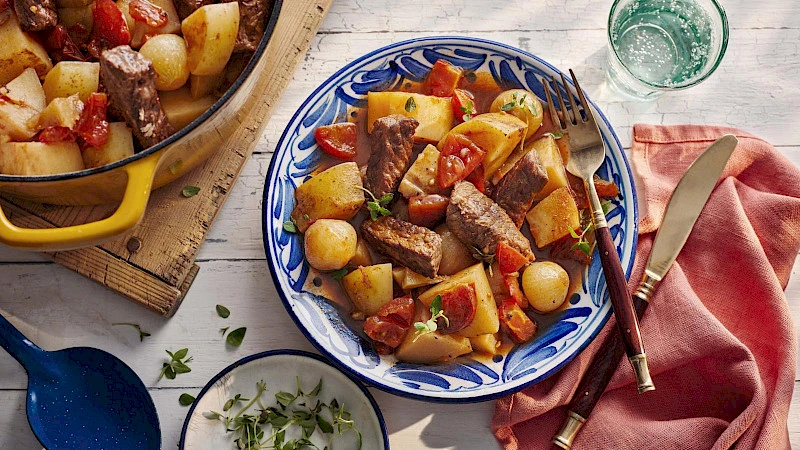
Frequently asked questions about stifado
Can I use a multicooker?
Stifado is usually made on the stove, but you can use a multicooker with the slow-cook setting. Set it close to the maximum setting and plan for the dish to cook about 5–7 hours. Add the onions in the last 2 hours to prevent them from falling apart.
Can I prepare the dish in advance?
Yes. Stifado becomes even tastier the next day as the flavors meld and develop. Once the dish is ready, let it cool, then refrigerate until the next day. Reheat and serve with your choice of side.
What to serve with stifado?
The classic pairing is orzo, served separately or simmered in a light tomato sauce. Other options include hilopites egg noodles, steamed rice, mashed potatoes, or even French fries. And definitely — bread with a good crust: it’s hard not to “clean the plate” with the sauce.
What wine goes with stifado?
Generally, in Cyprus, people try to use the same wine for cooking as for serving. You may choose another, but the key is that it is good and full-bodied. Local red wines work great, and for experimenters — aged blends.
Which restaurants in Cyprus serve stifado?
Almost any tavern focusing on national dishes will have stifado on the menu (especially during the cool season). Examples: Stamna Tavern in Ayia Napa, Art Cafe 1900 in Larnaca, Agios Demetrios Tavern in Troodos, Meze Taverna in Limassol, Argo in Paphos.
Follow our Instagram and Telegram — there we share not only about traditional dishes but also many other interesting things in Cyprus!
Author

I am a person who is not afraid to change life when my heart tells me that something greater lies ahead. I am originally from Belarus. I have journeyed from pedagogical and economic education to the financial sector and many years of work in logistics — a world where everything moves, changes,…
Comments
О, это очень вкусно и с жемчужный и с шалотом. Разными способами пробовали и всегда обалденно!