
“The Cypriot approach”: why the island is increasingly diverging from the pan-European mood
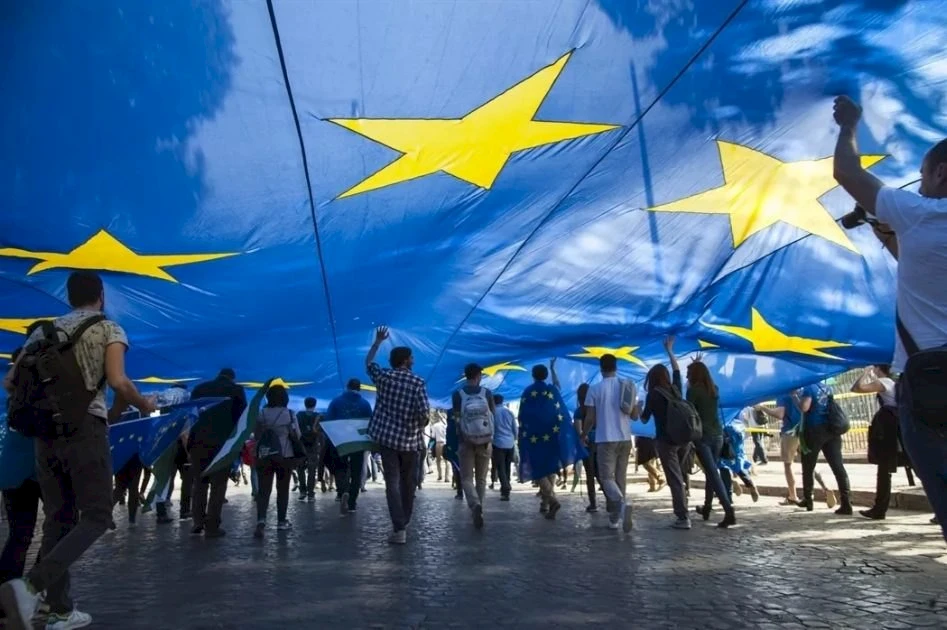
Cyprus is becoming “another Europe”
A fresh Eurobarometer survey from the spring of 2026 has shown: Cyprus is increasingly moving along its own political and social trajectory within the European Union. While Brussels focuses on security issues, supporting Ukraine, and strengthening European solidarity, Cypriot society is talking about something else — rising prices, housing, migration, and risks in the Middle East.
The study was conducted from March 12 to April 1, 2026. In Cyprus, 506 people were interviewed as part of a pan-European sample of 26,415 EU citizens.
What can be called the “Cypriot approach” is forming on the island: a combination of economic anxiety, a pragmatic attitude toward the EU, and a cautious distancing from foreign policy confrontation. And although Cyprus remains part of the European project, its public mood coincides less and less with the dominant line from Brussels.
Economic pessimism: the state is not trusted, but individuals still trust themselves
The main conclusion of the study is a sharp increase in economic pessimism. More than half of Cypriots — 53% — assess the state of the country's economy negatively. Only 46% of citizens perceive the situation positively. For comparison: on average in the EU, 60% of residents evaluate their countries' economies positively, while 38% evaluate them negatively.
Expectations for the future look even more alarming. Already, 51% of Cypriots believe that the economic situation in the country will worsen over the course of the year. This is a jump of 23 percentage points compared to the fall of 2025. Only 11% expect an improvement.
For Europe, this is a worrying signal, but not unique. Similar moods are seen today in Greece, Italy, and Spain, where the consequences of inflation and prolonged instability continue to weigh on society. However, in Cyprus, the pessimism proved to be particularly pronounced.
At the same time, a paradox characteristic of Southern European societies arises: people do not trust the country's economy, but they assess their own situation relatively calmly. Thus, 75% of Cypriots consider the financial situation of their households to be positive, and 60% are confident that their professional situation will remain stable in the coming year.
This is an important feature of the “Cypriot approach.” Unlike Northern Europe, where the state is considered the main guarantor of stability, people in Cyprus still rely more on family, personal connections, and their own ability to adapt to crises.
Housing becomes a new political problem
A few years ago, the housing issue rarely occupied a central place in European politics. Now the situation is changing — and Cyprus is among the countries where the problem is felt particularly acutely.
According to the survey, 21% of Cypriots name the housing issue as one of the country's main problems. At the same time, 30% consider housing affordability a priority for EU policy — almost twice the European average of 16%.
The reasons are clear: rising real estate prices, the island's limited territory, the influx of foreign capital, the development of short-term rentals, and migration pressure.
A similar situation is unfolding in Portugal, Spain, and Ireland. In Lisbon, Barcelona, and Dublin, housing has already turned into one of the main factors of political discontent. But in Cyprus, this topic is further amplified by a sense of general economic instability.
Trust crisis: almost three-quarters of citizens do not trust parliament
The survey records another steady trend — a deep crisis of trust in state institutions.
Only 31% of Cypriots trust the government. Only 22% trust the parliament. At the same time, 74% of citizens directly state their distrust of the legislative branch.
This is part of a broader European trend. In France, following political crises around pension reform, irritation toward the government has intensified. In Germany, support for protest parties is growing against the backdrop of migration problems and economic downturn. In Bulgaria and Slovakia, distrust of elites has long been chronic.
But Cyprus is different: here, the crisis of trust extends to European institutions as well. Only 39% of Cypriots trust the European Union, while 54% express distrust. Although this is four points better than in the fall of 2025.
This is where the specificity of the “Cypriot approach” manifests: the EU is perceived more as a useful mechanism — a source of finance, security, and political support — rather than a project of shared political identity.
Europe without European identity
The most revealing results concern the self-identification of Cypriots.
92% of citizens feel a strong attachment to their city or village, and 95% to their own country. However, only 52% feel a connection to the European Union, and only 45% to Europe as a broader concept.
For Brussels, this is symptomatic. The idea of a pan-European identity, actively promoted in recent decades, is increasingly clashing with the return of national and local priorities.
While in Belgium, Luxembourg, or the Netherlands, European identity has long been part of the social norm, Cyprus in this sense is closer to Poland, Hungary, or the Czech Republic.
At the same time, the attitude toward the EU itself remains ambiguous. Despite the low level of trust, 36% of Cypriots have a positive image of the European Union — nine points higher than the European average. Furthermore, 57% of citizens are optimistic about the future of the EU.
The “Cypriot approach” can be described by the formula: integration without emotional unity. The EU is needed, but the sense of belonging to a single European political nation remains weak.
The Middle East is more important than Ukraine
One of the most notable differences between Cyprus and most EU countries is the perception of threats.
30% of Cypriots name the conflict in the Middle East as one of the country's main problems. This is the second-highest concern after rising prices and the cost of living, which worries 36% of citizens.
At the EU level, the situation looks different. On average in the Union, the Middle East is also considered the main foreign policy problem — 35%, but the Russian invasion of Ukraine takes second place with 27%, and migration third with 26%.
In Cyprus, the Ukrainian topic is perceived less acutely. This is explained by geography. The island is located near a zone of regional instability, migration routes, and key points of the eastern Mediterranean. For Cypriots, crises in the region are not abstract international politics, but a direct factor in their own security.
In this respect, Cyprus is closer to Greece and Italy than to Poland or the Baltic states. Southern Europe increasingly views security through the prism of migration, Middle East instability, and pressure on Mediterranean borders.
Ukraine: humanitarian support without military participation
The most serious divergence between Cyprus and the pan-European line relates to Ukraine.
The majority of Cypriots — 77% — support the reception of Ukrainian refugees. Another 70% approve of economic and humanitarian aid to Kyiv.
But when it comes to sanctions against Russia or the supply of weapons to Ukraine, the mood changes dramatically.
Only 30% of Cypriots support economic sanctions against Russia, compared to an average of 70% in the EU. 62% of the island's residents oppose sanctions, while in the EU, only 23% do.
Even more telling is the issue of military aid. Only 18% of Cypriots support financing the supply of weapons to Ukraine. 78% are against. For comparison: on average across the EU, 56% of citizens support military support for Kyiv, while 39% oppose it.
Even the prospect of Ukraine joining the EU is perceived much more cautiously in Cyprus: 41% of citizens support it compared to 56% on average in the Union.
By comparison: in Poland, Finland, Sweden, and the Baltic states, military support is seen as a matter of their own security. There, the Russian threat is viewed as immediate and long-term.
In Cyprus, the logic is different. Here, there is a stronger demand for non-involvement, caution, and the minimization of geopolitical risks.
Thus, another feature of the “Cypriot approach” is formed — humanitarian solidarity without the desire to participate in a major geopolitical confrontation.
Digital anxiety: platforms are also not trusted
Distrust in Cyprus extends beyond politics. More than half of citizens — 53% — believe that large online platforms are not effective enough at removing illegal and harmful content. Another 45% are convinced that digital platforms are not doing enough to protect users.
Similar moods are intensifying in the largest EU countries as well — primarily in Germany and France, where digital security issues are becoming part of state policy.
However, in Cyprus, this anxiety fits into a broader social background — a crisis of trust in almost all major institutions, from parliament to technological platforms.
Europe is becoming a union of different models
The Eurobarometer survey shows that not only political but also psychological fragmentation is increasing within the EU.
The “Cypriot approach” is not just a peculiarity of one island state. It is a reflection of a broader process in which different parts of Europe are starting to understand security, economy, solidarity, and the role of the EU itself in different ways.
For Northern and Eastern Europe, Ukraine and military security remain at the center of the agenda. For southern countries, it is the cost of living, housing, migration, and the instability of the Mediterranean.
Cyprus has turned out to be one of the points where this gap is most clearly manifested. And that is precisely why the results of this survey are important not only for the island itself but also for understanding what Europe is becoming in the mid-2020s.
Author

Born in the city of shipbuilders, Mykolaiv (Ukraine). Currently living in Moscow. Diplomat in reserve. More than 10 years of experience in the Mediterranean region (Greece, Cyprus). Until 2015, First Secretary of the Russian Embassy in Cyprus. Fluent in Greek and English. Completed civil service in…
You may also be interested in:
- Housing crisis in Europe intensifies: rent becomes unaffordable for workers
- Fitch affirms Cyprus rating: economy remains resilient amid global risks
- Police night raids: 12 detained and dozens of traffic violations
- Safe Bulkers strengthens Cyprus's position: largest shipowner under the Cypriot flag expands 'green' fleet
- Cyprus strengthens control in the hydrocarbon sector: new cooperation between authorities and auditors
